Balloon Photo Frames give guests a decorated window to pose behind. The empty centre is as important as the balloons around it: it is where faces, shoulders and the background will appear. A design can look impressive on its own yet produce a crowded photograph once a family steps into the picture. The most useful way to choose one is to think about the finished portrait, then decide which parts of the frame should carry the theme. These real examples range from tropical characters and school colours to metallic stars and carnival details. They show how the border can tell a story while leaving guests room to become part of it.
Balloon Photo Frames: start with the open centre
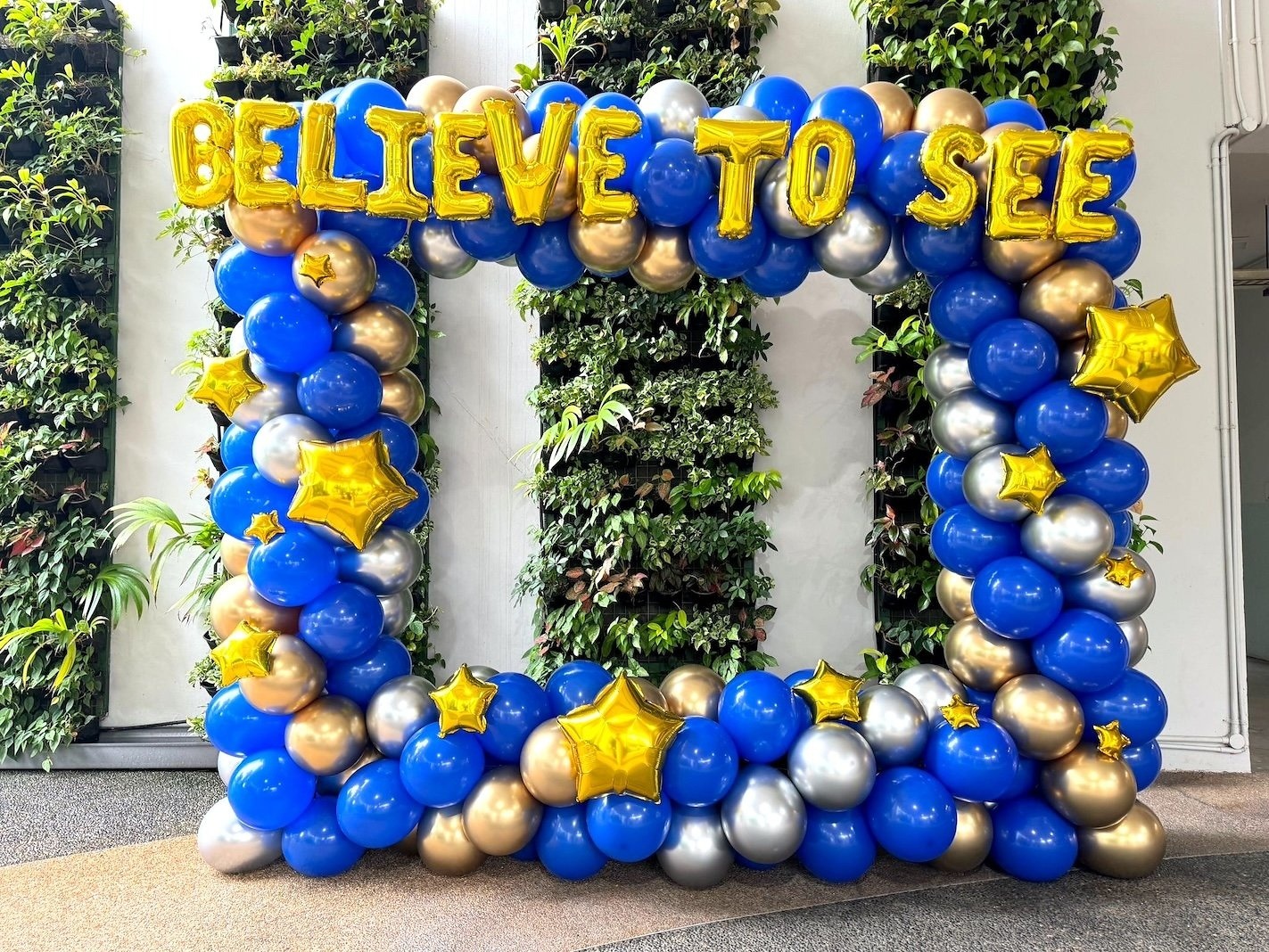
The blue and metallic frame above uses a broad rectangular opening, with its message placed across the top. Notice how the star details remain mainly within the border. That separation lets the lettering, decoration and people occupy different parts of the eventual photograph. When comparing designs, look at the usable opening rather than only the outside silhouette. A thick border takes up visual space even if the complete installation is large.
Decide whether the intended picture is a close portrait, a couple or a small group. Then ask for a proposed opening that suits that composition. Do not infer a guest capacity from an empty installation photograph. The final dimensions, position of the bottom edge and camera distance all affect what fits. Twist Concept’s balloon photo frame service is the starting point for discussing a design around the people you want to photograph.
Give the theme one recognisable feature
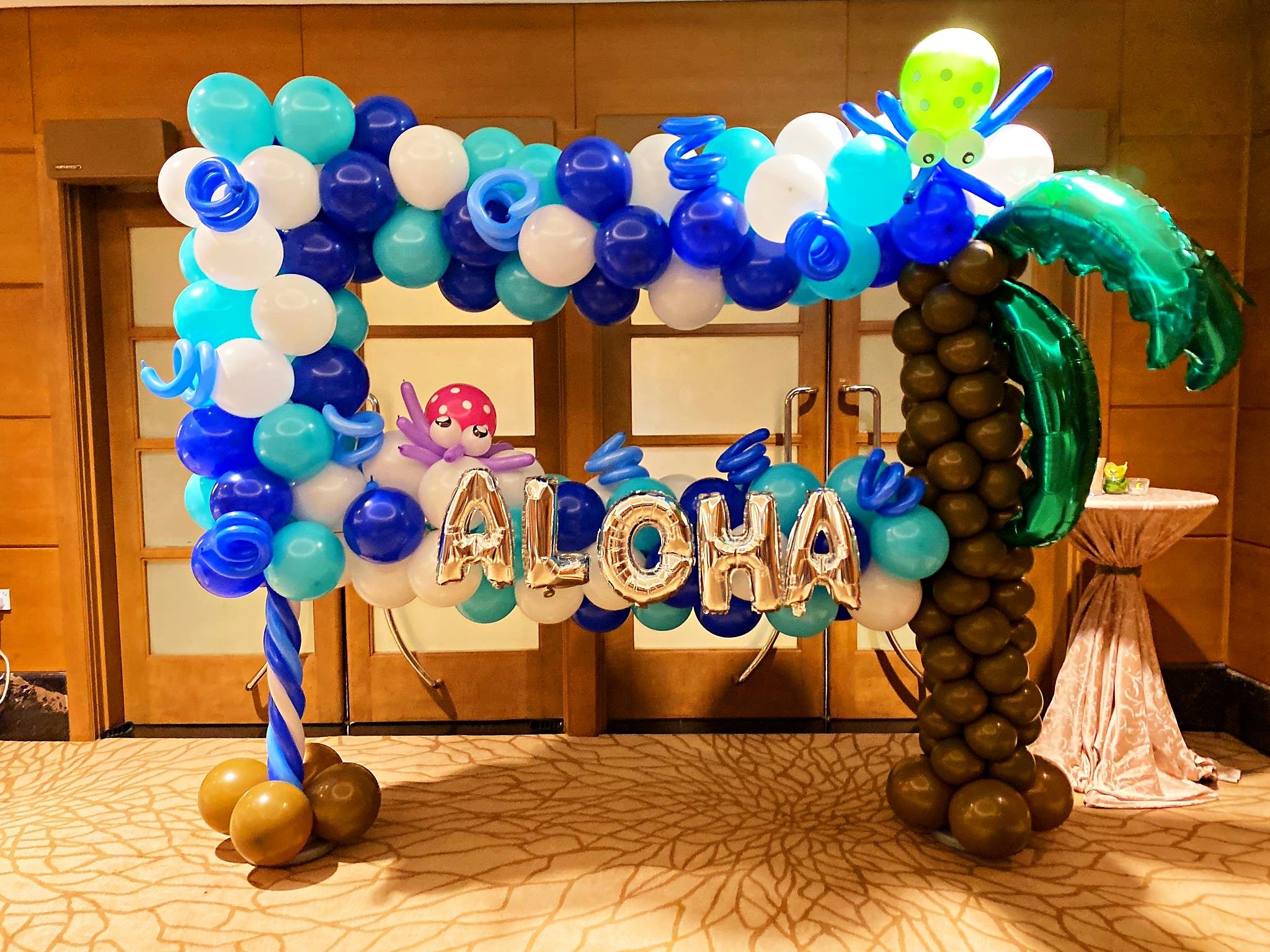
The beach example combines a palm tree, sea creatures and Aloha lettering. The palm occupies one side of the frame, creating a distinctive outline without filling the entire centre. This is a useful approach when the theme has several possible symbols: select a leading feature and let smaller details support it.
For a beach party, that feature might be a palm or a sea creature. For a garden celebration, it could be a large flower. A reference picture should explain which element matters most to you. Requesting every possible themed shape can make the border harder to read, particularly in a small phone photograph. The aim is for guests to recognise the setting quickly, without having to study each balloon individually.
Place characters beside faces rather than across them
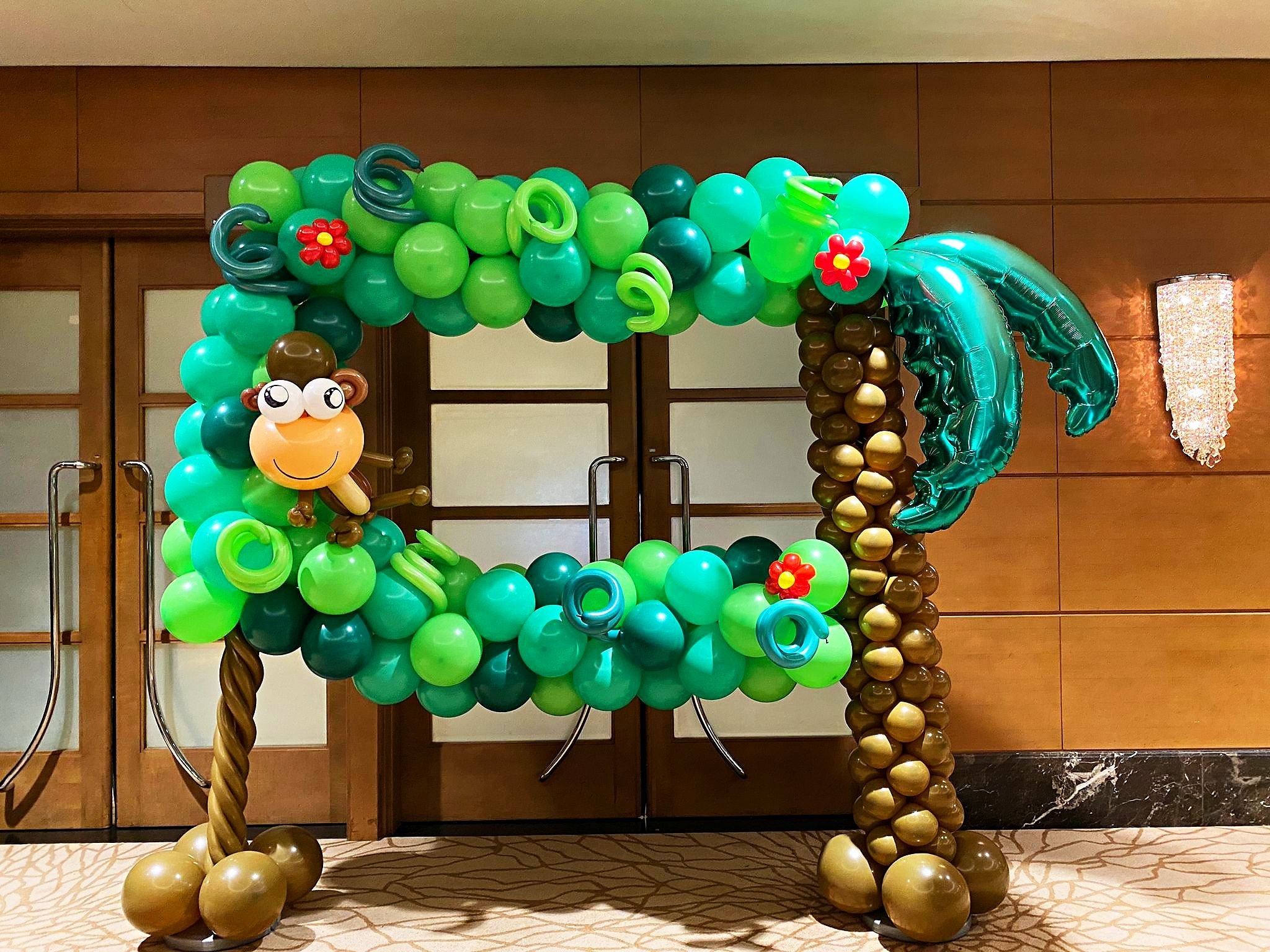
The jungle frame uses a monkey on the left and a palm on the right. Its sculpted details establish the theme at the edges. Before agreeing on character placement, consider where a guest’s head is likely to appear. A character hanging deep into the opening may compete with a face or become hidden behind a taller person.
Children and adults create different compositions within the same frame. Ask to review the design with both in mind if families are attending. A low decorative element can look delightful in an empty setup but disappear behind a group. Conversely, an element placed very high may be cropped out of a close photograph. Choose the details you want visible in the most common picture, and treat a full installation photograph as a separate composition.
Keep the message short enough to remain part of the picture
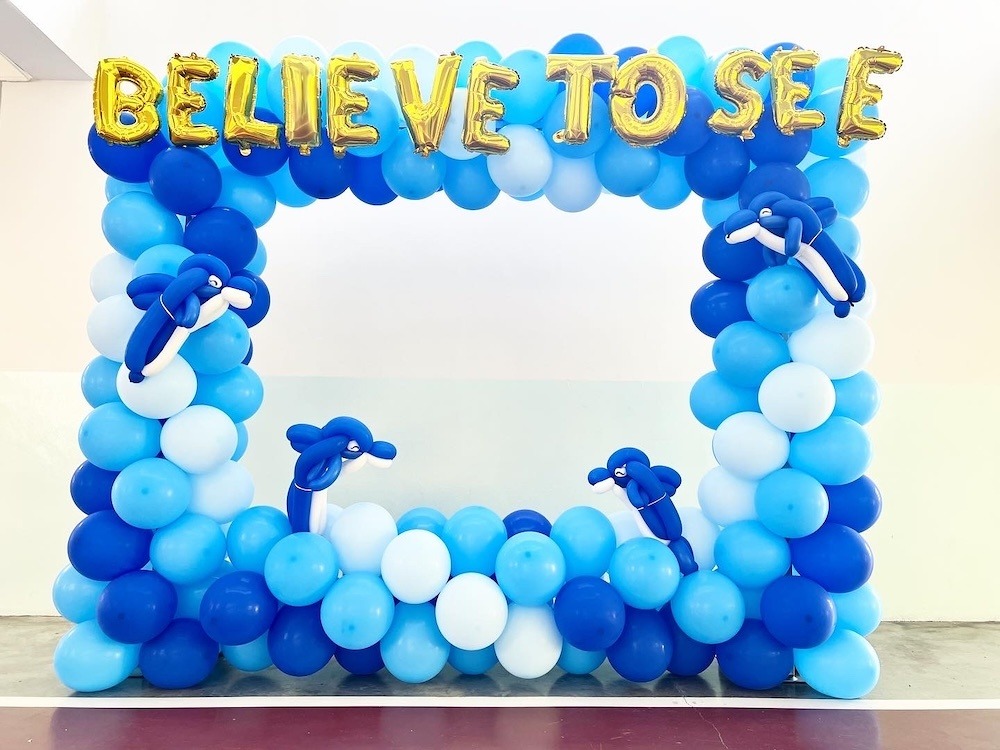
Lettering can turn a general decoration into an event-specific keepsake. The blue dolphin frame carries its phrase along the upper edge, leaving the centre open. A school name, milestone or short welcome can serve the same purpose. The challenge is to make the words readable without forcing them into the space reserved for people.
Provide the exact wording early, including spelling and capitalisation. Compare how the message looks in a wide photograph and a tighter portrait. Long sentences may require smaller letters or several lines, changing the balance of the frame. If the event already has a detailed printed sign nearby, the balloon frame may only need a short name or occasion. Different pieces of decoration do not need to repeat all the same information.
Use a busy border deliberately
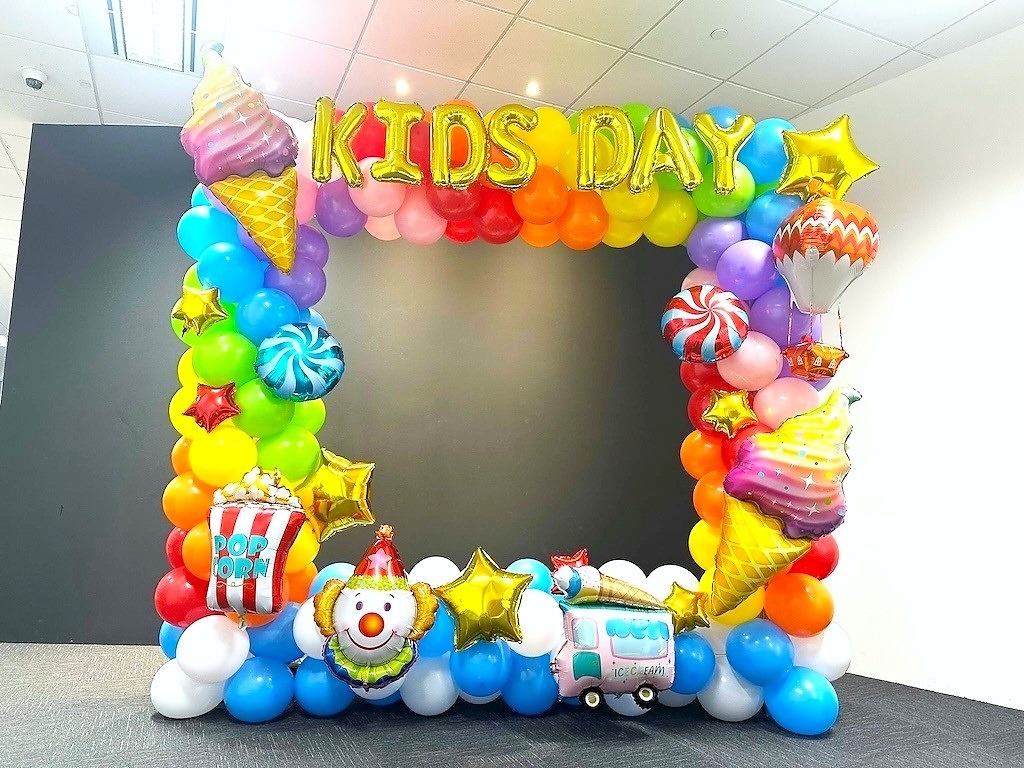
The Kids Day example uses popcorn, sweets, stars and other playful shapes around a rainbow border. Its central area is comparatively plain. That contrast gives the decoration energy while leaving a clear place for guests. A richly decorated border works best when the surrounding scene does not introduce another competing collection of shapes and words.
Think about the clothing and props likely to appear in the picture too. Costumes, graduation accessories or colourful party hats add their own detail. If guests are already bringing a strong visual theme, a simpler frame may be enough. If the portrait clothing is fairly neutral, a lively border can do more of the storytelling. This is a design choice, not a rule that every children’s event must use every colour.
Check what the opening reveals behind the guests
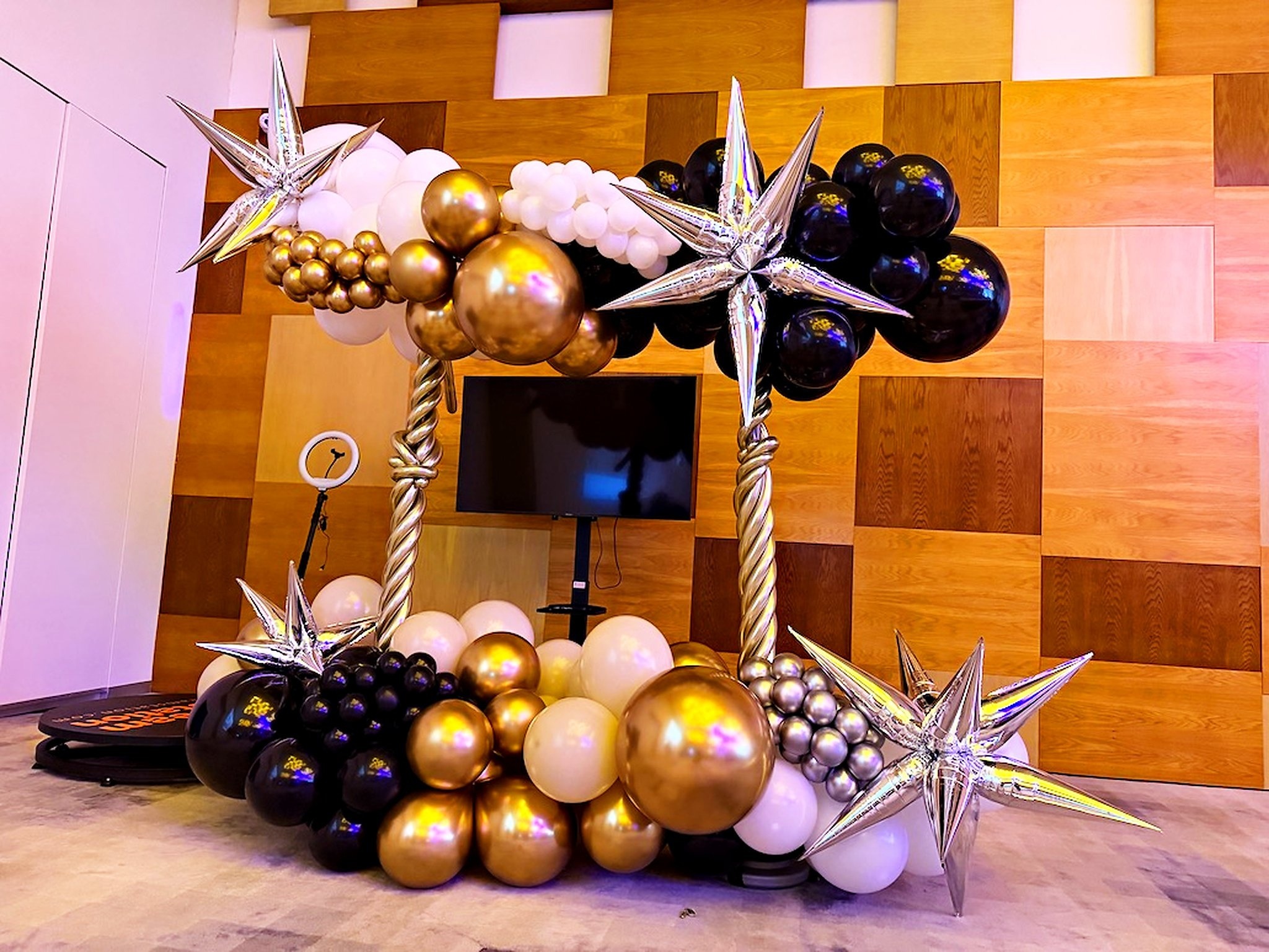
An open frame does not hide the room. In the metallic-star example, the wall and equipment behind it remain visible. The frame and the background therefore need to be considered together. A television, noticeboard or doorway may become an unintended part of the photograph even when it is not noticeable during an initial walk through the venue.
Review the scene from the camera position. A small change in angle may put a plain wall behind the opening; another angle may reveal activity elsewhere in the room. Ask the event team how the frame should be positioned and supported, rather than moving a completed installation yourself. Also distinguish a balloon frame from a complete photography service: confirm separately whether a camera, operator, printing or additional backdrop is part of the arrangement you are booking.
Compare school, party and celebration designs
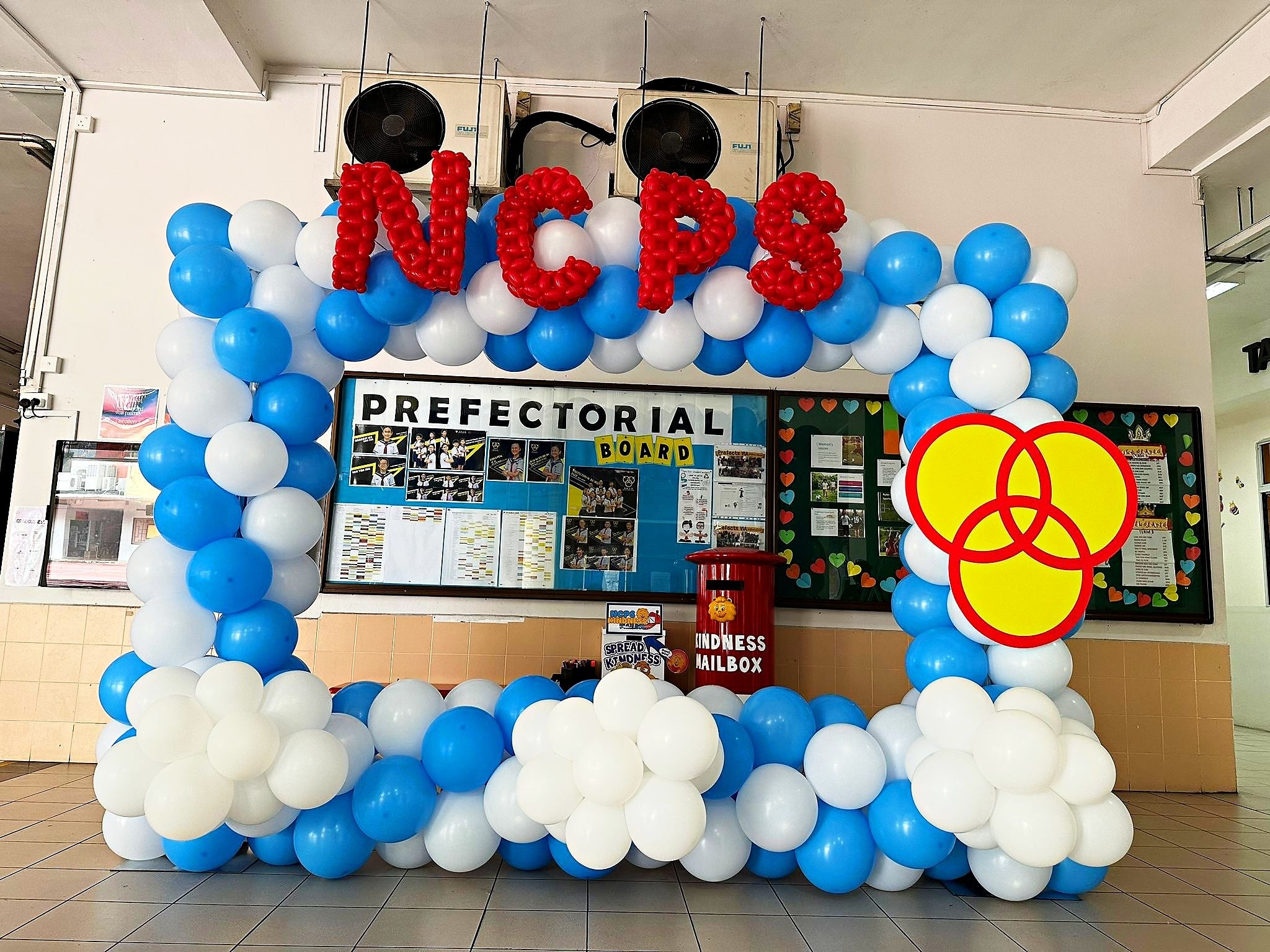
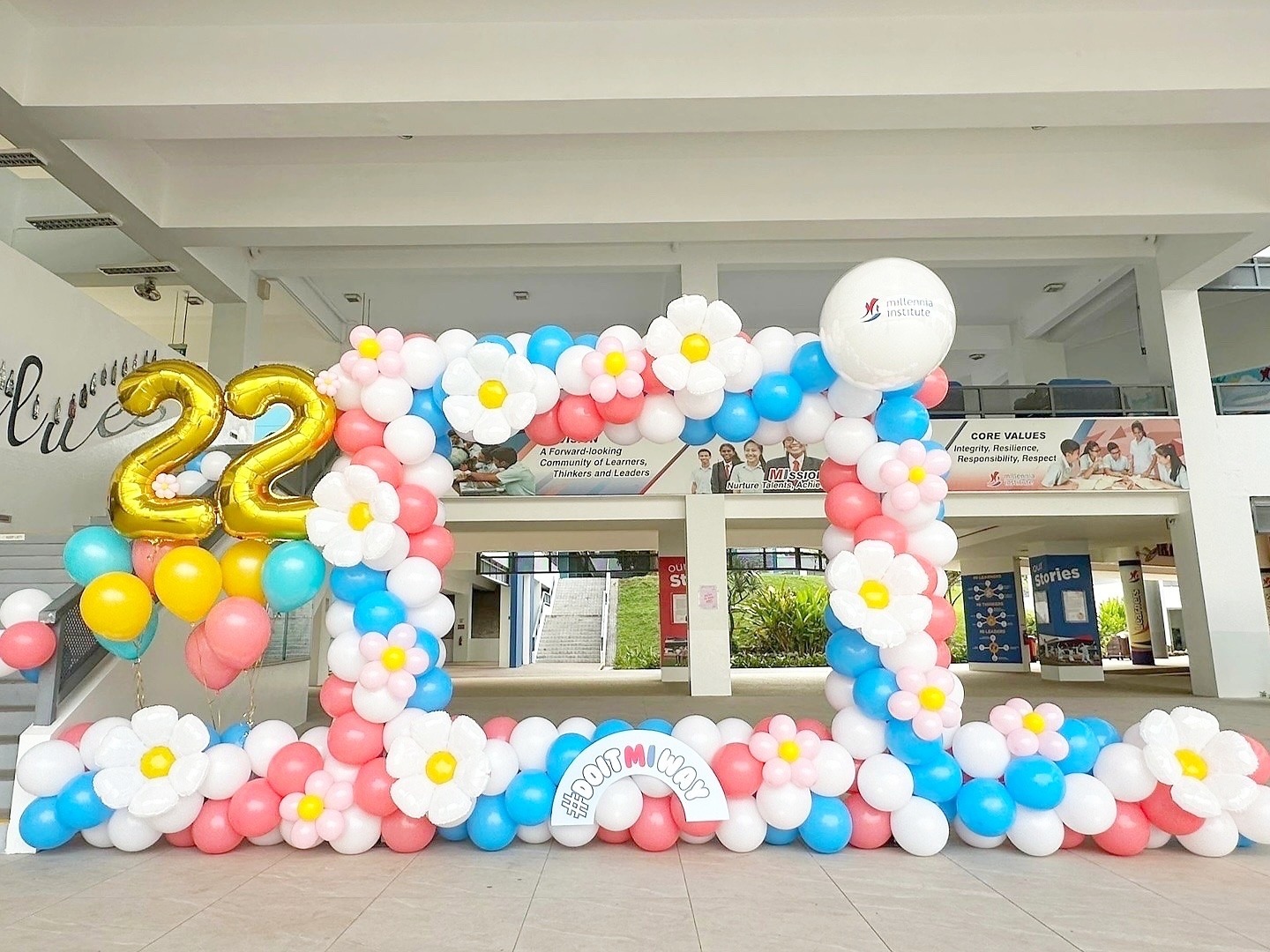
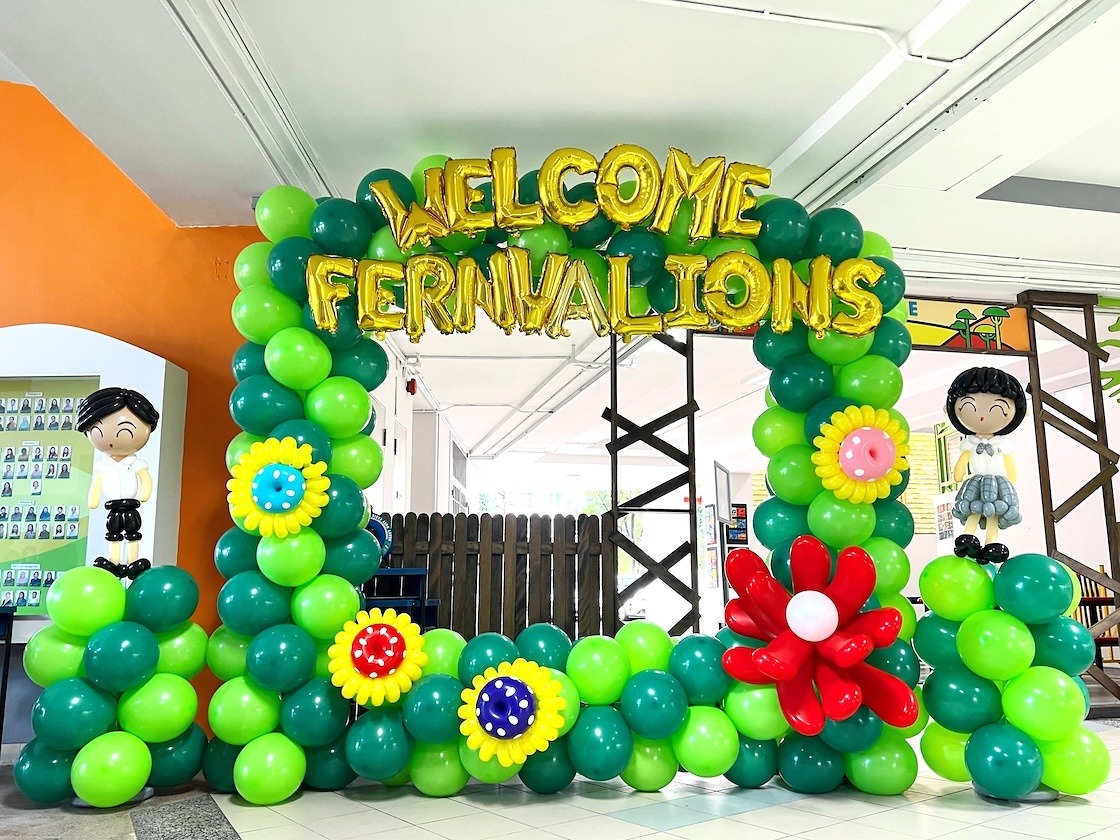
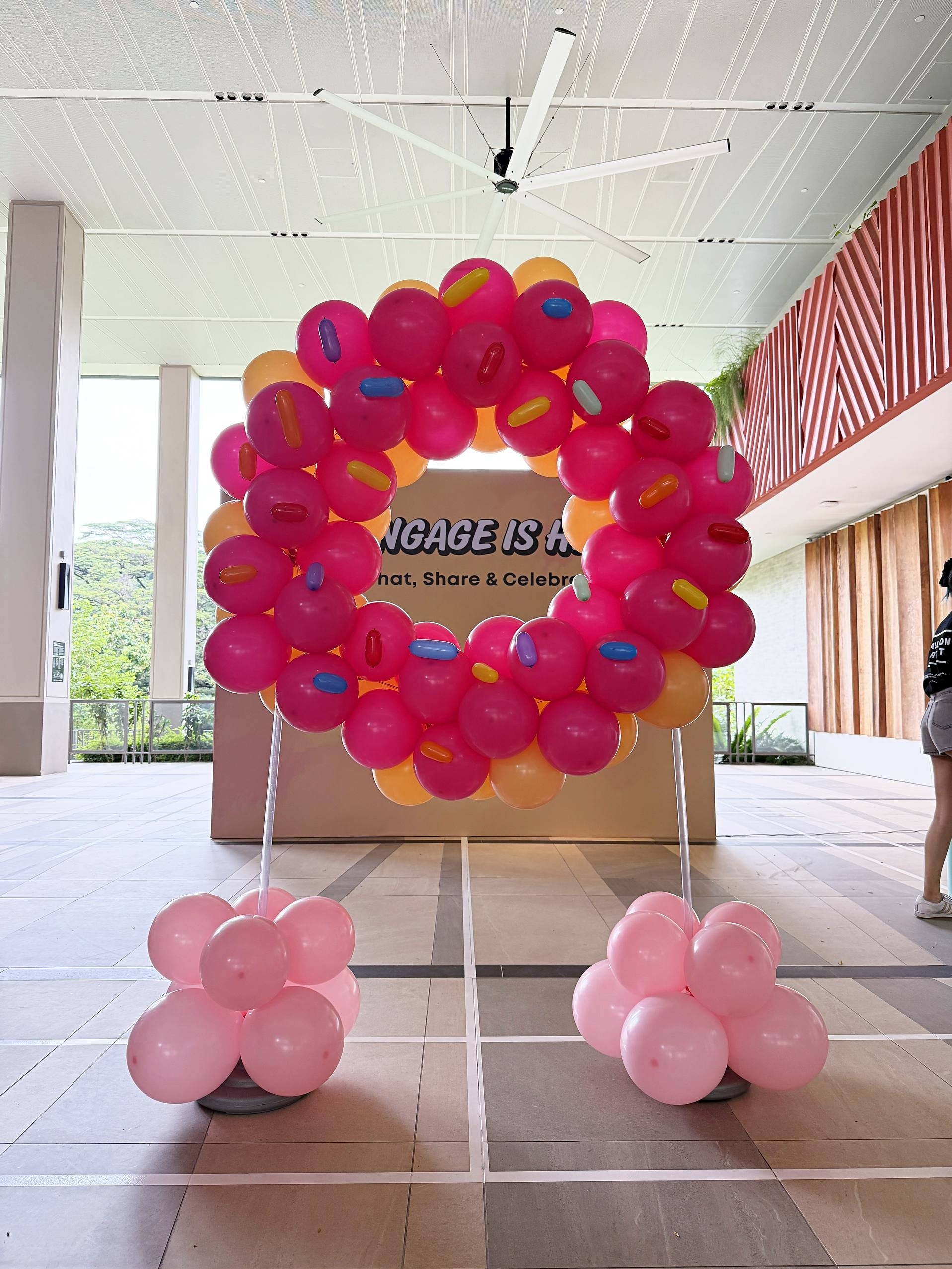
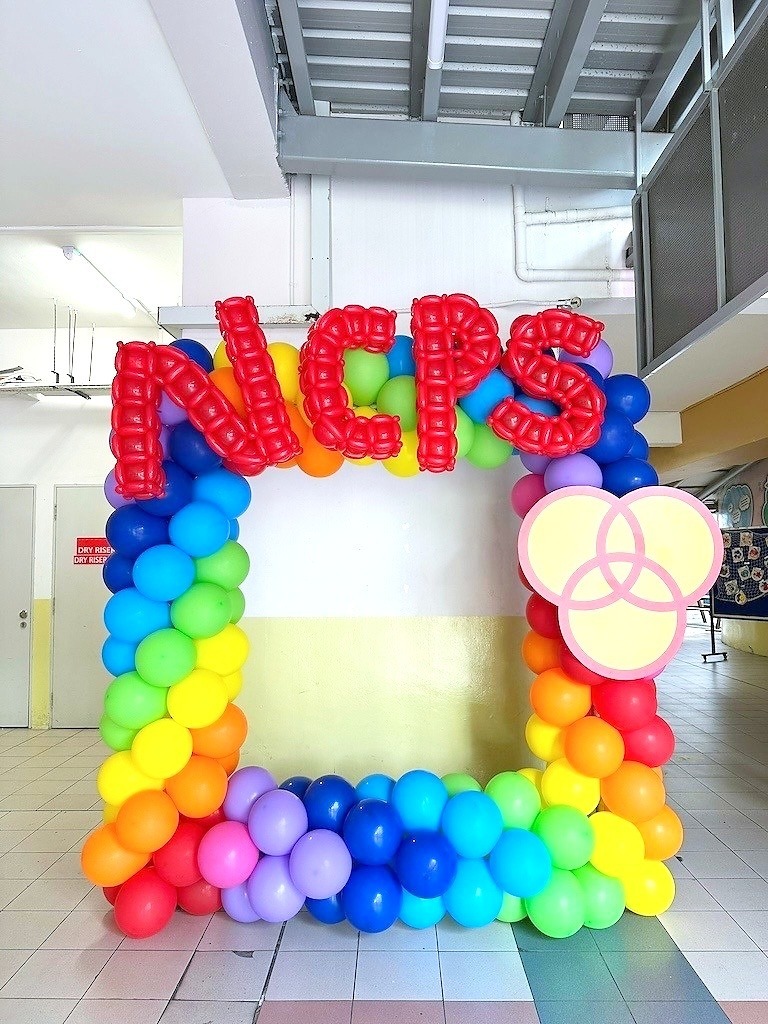
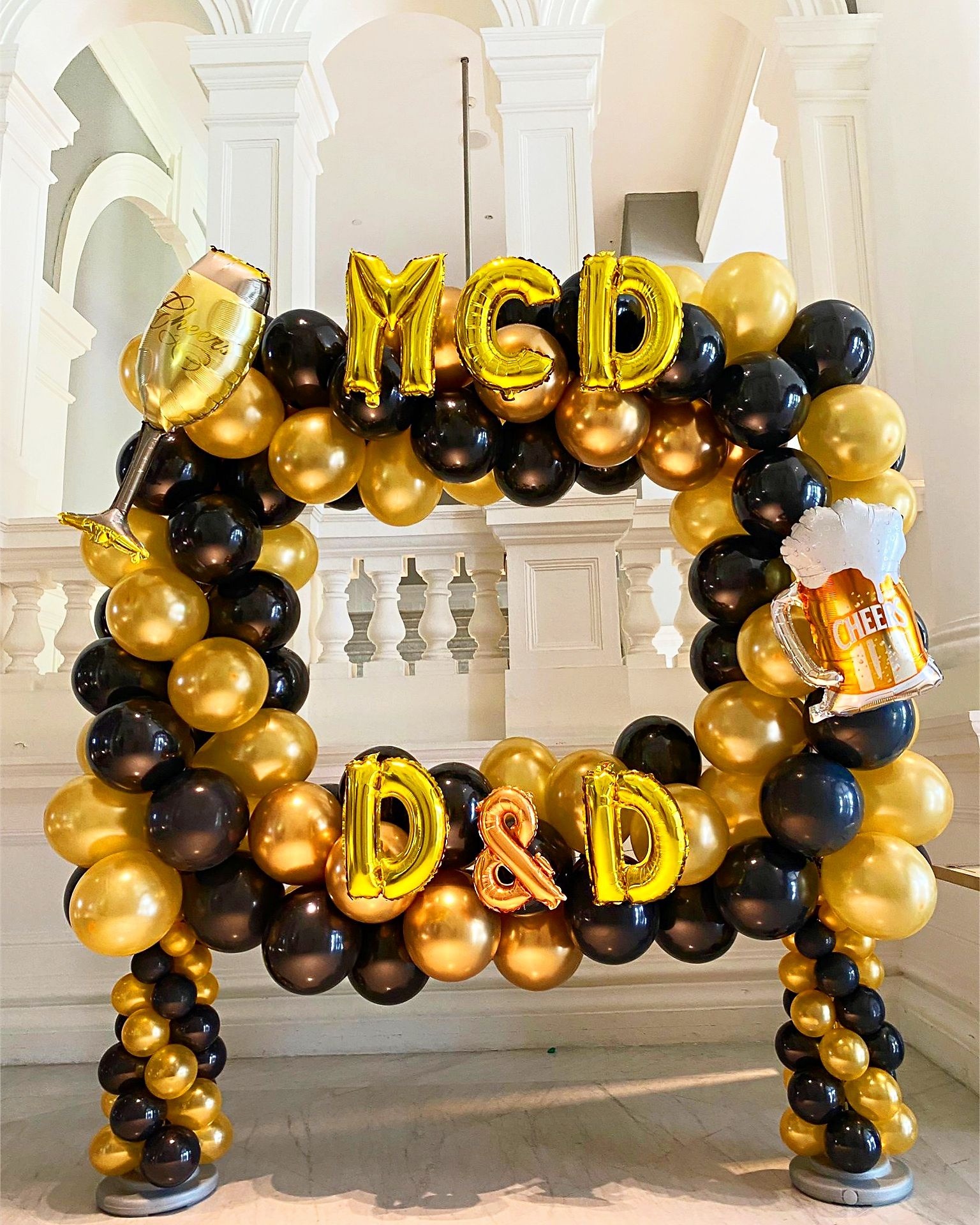
These examples show how the same open-frame idea changes through colour, flowers, lettering and silhouette. The first row groups wider school and welcome designs. The second shows taller standing frames, including a circular doughnut design and a dinner-and-dance treatment. Compare the opening and the position of the message, not just the colour palette. The most elaborate example is not automatically the best match for your planned portraits.
Turn a favourite reference into a specific design request
Choose one reference for the overall shape and identify the details you want to adapt. Tell Twist Concept the exact words, preferred colours, intended subjects and whether the picture should include their upper bodies or a wider group. Include a photograph of the background visible through the proposed opening. These details explain the visual result more clearly than asking for something impressive or Instagram-worthy.
For another view of this decoration category, THAT Balloons’ balloon photo frame service also shows standing frame examples. Use references to communicate shape and style, while confirming the specifications and inclusions of your own quotation. Well-chosen Balloon Photo Frames make the occasion recognisable, keep the message readable and leave the people in the photograph as the main subject.